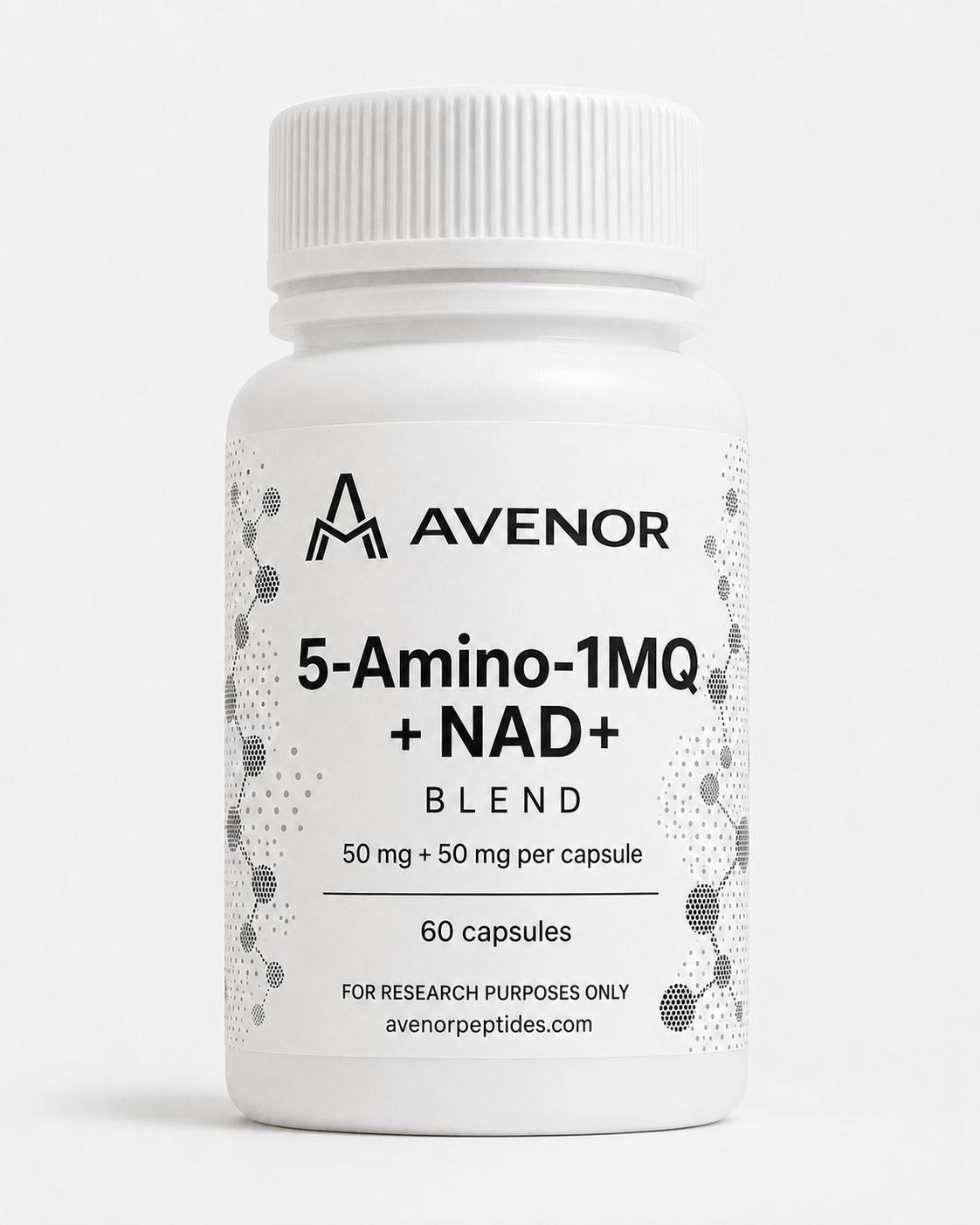
- Component 1 — class
- 5-amino-1-methylquinolinium (5A1MQ, marketed as "5-amino-1MQ"): a synthetic small molecule built on a quinolinium scaffold. NOT a peptide, with no amino acid chain of any kind
- Component 1 — molecular target
- An inhibitor of the enzyme NNMT (nicotinamide N-methyltransferase), a cytosolic SAM-dependent enzyme
- Component 1 — selectivity
- Does not inhibit structurally related SAM-dependent methyltransferases nor the enzymes of the NAD+ salvage pathway (Neelakantan et al., 2017)
- Component 1 — membrane permeability
- Characterized as permeable in PAMPA and Caco-2 cell assays — both passive and active transport (Neelakantan et al., 2017)
- Component 2 — class
- NAD+ (nicotinamide adenine dinucleotide): a naturally occurring coenzyme, a dinucleotide. NOT a peptide and NOT a drug — it is an endogenous molecule present in every cell
- Component 2 — biochemical role
- Hydrogen carrier in redox reactions and substrate for signalling enzymes — sirtuins, PARPs and CD38 (Rajman et al., 2018)
- Component 2 — biosynthesis
- Produced by the salvage pathway from the precursor nicotinamide, and de novo from tryptophan — the de novo route operating selectively in the liver in laboratory animals (Liu et al., 2018)
- Shared basis of the two components
- Both concern the same metabolic pathway: NNMT consumes nicotinamide, which is the precursor of NAD+
- Study of the combination
- None. A PubMed search for the two substances combined returns zero publications
- Human data
- No clinical trial of 5A1MQ in humans. All published data derive from cell culture and mice
- Oral bioavailability of NAD+
- Disputed in the literature. No publication was found documenting absorption of intact oral NAD+ in humans; this is why precursors (NR, NMN) are the ones being studied
- Regulatory status
- 5A1MQ holds no approval from the FDA, EMA, the Greek NOM or any other authority, for any indication
- Product form
- Oral capsule
- Purity
- ≥98% (HPLC) — supplied with CoA