Free shipping — the threshold depends on the destination country, confirmed at checkout.

    Research Use Only (RUO). For laboratory research only. Not for human or veterinary use.

    Research Use Only (RUO):Research classification with product and batch documentation where available.
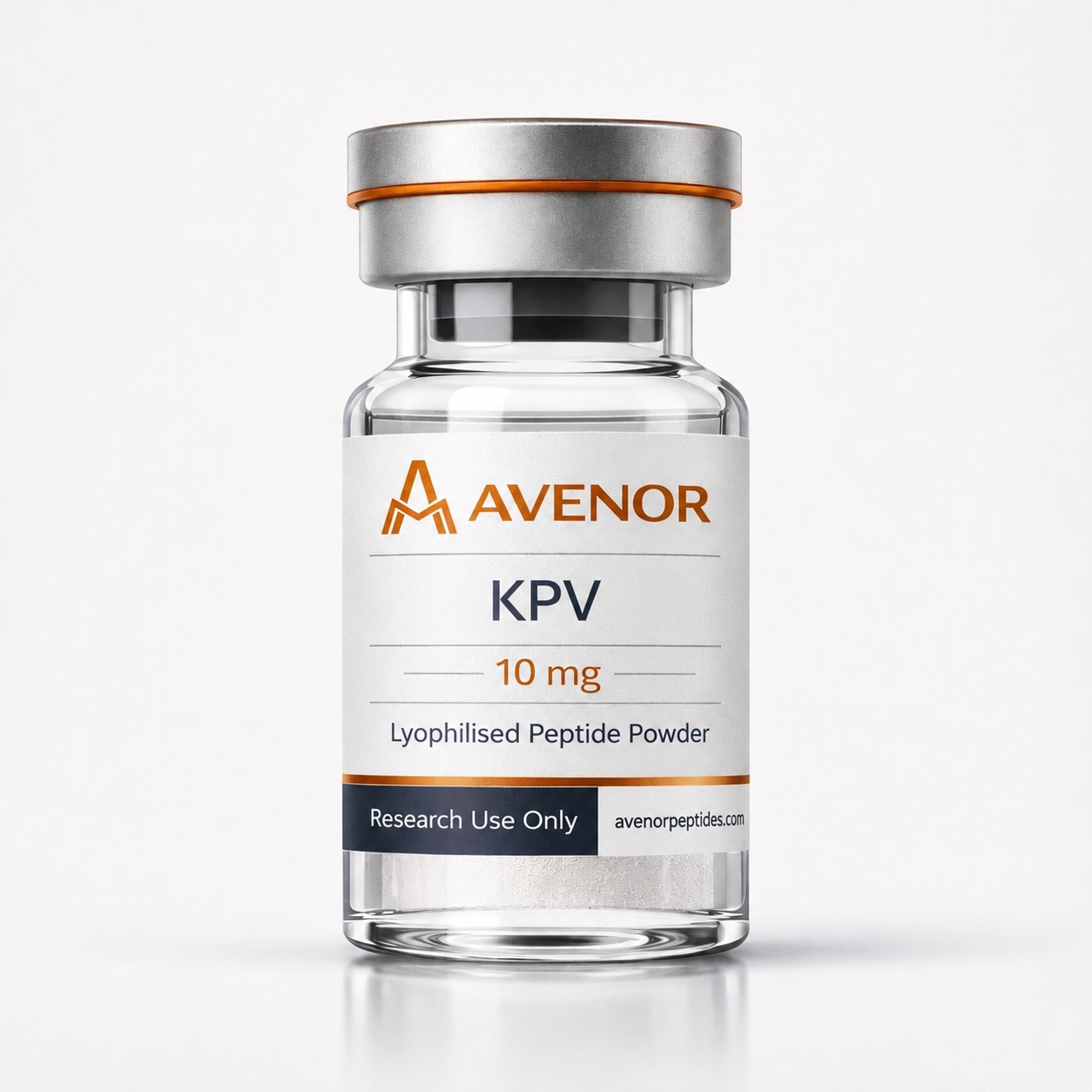
    KPV 10 mg - Avenor Peptides

    Recovery & Repair

    KPV

    Strength: 10 mg

    KPV is a research-use catalogue item organized around product identity, SKU traceability and available documentation.

    €39,00
    In stock
    1

    The more products, the bigger the discount

    2 → −5%
    3 → −8%
    4 → −11%
    5+ → −15%
    across your whole basket, automatically
    Batch documentationShips from Greece

    Free shipping: Greece from €50, Cyprus and Bulgaria from €100, France, Germany, Italy, Belgium, Netherlands and Spain from €200. Details

    This product is intended exclusively for laboratory research use. It is not intended for human consumption, diagnosis, treatment, or prevention of disease.

    Product information

    FormResearch product
    Strength10 mg
    SKUAVR-KPV-10MG
    Stock statusIn stock
    COA / BatchSee the documentation state below
    StorageRefer to the label and available documentation details.
    Packaging / shippingControlled shipping preparation according to the available SKU variant.

    Documentation on request

    There is no published document for this specific SKU variant at the moment.

    Contact us about documentation

    Research overview

    Documentation & COA

    Batch documentation and COA, where available, are linked to the specific product batch and SKU.

    This product is intended exclusively for laboratory research use. It is not intended for human consumption, diagnosis, treatment, or prevention of disease.

    Product profile

    3

    amino acids — lysine, proline, valine

    11-13

    the positions it occupies within the α-MSH hormone

    ≈342 g/mol

    molecular weight — among the smallest peptides in the catalogue

    ≥98%

    purity by HPLC

    Research context

    What it is

    KPV is a tripeptide — just three amino acids: lysine, proline, valine.

    It is the tail of a natural hormone, α-MSH.

    The smallest piece that still carries its full anti-inflammatory action.

    The technical detail

    KPV (Lys-Pro-Val) is the C-terminal tripeptide of α-melanocyte-stimulating hormone (α-MSH).

    How it works

    It does not mask inflammation. It calms it from the inside.

    Because it is so small, it slips into cells and turns down the signals that keep inflammation burning.

    One of those signals is TNF-α — a key trigger of chronic inflammation.

    The technical detail

    It lowers pro-inflammatory cytokines such as TNF-α in target cells, acting inside the cell (Xiao et al., 2017).

    What the studies showed

    The first studies in models of intestinal inflammation showed two things at once.

    Less inflammation and faster tissue healing.

    3

    amino acids

    ↓ TNF-α

    inflammation, 2017

    IL-1β · IL-6 · TNF

    down, 2024

    In a 2024 colitis study, KPV in a gel form lowered IL-1β, IL-6, and TNF-α and restored the proteins that seal the gut wall.

    How it compares

    Most anti-inflammatory peptides are large molecules.

    KPV is one of the smallest that still works — and that size is an advantage, not a limit.

    The most recent research broadens its role: wound healing, antibacterial activity even against resistant strains, and, in 2026, lower oxidative load and fat in liver cells.

    The technical detail

    2025–2026 (Adnan et al.; Lee et al.): KPV-loaded gels reduce inflammation, promote regeneration, and act against MRSA; KPV lowered free radicals and regulated the PPARγ pathway in HepG2 liver cells.

    Laboratory use

    Used in a controlled laboratory setting for in vitro studies of NF-κB and MAP kinase signalling in cell lines, for uptake and competition experiments at the PepT1 transporter, for quantification of cytokine and chemokine secretion by ELISA and real-time RT-PCR, as a component under study in nanocarrier and hydrogel formulations, and for identity and purity confirmation by HPLC and mass spectrometry.

    Research Use Only. For laboratory research exclusively. Not intended for human or veterinary use, diagnosis, treatment, or disease prevention. The findings referenced derive from preclinical studies in cell lines and laboratory animals and do not constitute a claim of efficacy or benefit in humans.

    Structural data

    Class
    Melanocortin-family tripeptide — the C-terminal fragment of α-MSH
    Sequence
    Lys-Pro-Val (KPV) — lysine, proline, valine
    Identity in the literature
    α-MSH(11-13) — the last three residues of the 13-amino-acid α-MSH (SYSMEHFRWGKPV)
    Chain length
    3 amino acids
    Molecular formula
    C16H30N4O4
    Molecular weight
    ≈342.4 g/mol
    Parent molecule
    α-melanocyte-stimulating hormone (α-MSH), derived from proopiomelanocortin (POMC)
    Route of cellular entry
    Transport via the di/tripeptide transporter PepT1 (Dalmasso et al., 2008)
    Molecular target described
    Inhibition of NF-κB activation and MAP kinase pathways — an intracellular action, not surface receptor binding
    Product form
    Lyophilized powder in a sealed vial (injectable format)
    Purity
    ≥98% (HPLC) — supplied with CoA

    Comparison

    Feature comparison

    FeatureKPV injectable (this product)KPV capsule (kpv-pill)Melanotan II / PT-141
    MoleculeLys-Pro-Val — a tripeptideLys-Pro-Val — the exact SAME moleculeCyclic α-MSH analogues, considerably larger
    FormatLyophilized powder in a vial, for reconstitutionSolid oral formatLyophilized powder in a vial
    What actually differsThe presentation, not the moleculeThe presentation, not the moleculeA different molecule and a different mode of action
    Action at melanocortin receptorsDoes not activate the classical MC1R/cAMP pathway (Elliott et al., 2004)Same molecule — same profileMelanocortin receptor agonists (MC1R, MC3R, MC4R)
    Effect on melaninNo melanogenic activity described in the literatureSame molecule — same profileMelanotan II was studied precisely for melanogenic activity
    Pathway describedIntracellular NF-κB inhibition after PepT1-mediated entrySame pathwayGPCR signalling at the cell surface
    Maturity of the evidencePreclinical — cells and animal modelsPreclinical — cells and animal modelsPT-141 has advanced into clinical trials; Melanotan II has not

    Storage & handling

    • The sealed vial of lyophilized powder is stored refrigerated and protected from light.
    • In lyophilized form the peptide is markedly more stable than in solution — the literature explicitly notes the instability of KPV in liquid form (Sun et al., 2021).
    • Once reconstituted in a suitable sterile solvent, the material is treated as unstable and kept refrigerated and protected from light.
    • Reconstitution is performed gently, without vigorous agitation, so that peptide integrity is not degraded.
    • Avoid repeated freeze–thaw cycles.
    • Avoid prolonged exposure to room temperature and to direct sunlight.
    • Handle using standard laboratory practice, aseptic technique and appropriate personal protective equipment.
    • Keep away from children and out of food preparation areas.

    Documentation

    • Certificate of Analysis (CoA) per batch, with date and lot number.
    • Purity analysis by HPLC — specification ≥98%.
    • Identity and molecular weight confirmation by mass spectrometry.
    • Research Use Only (RUO) declaration on the packaging.
    • Documents available on request for the specific batch.

    References

    References & documentation

    1. 1.Cutuli M. et al. (2000). Antimicrobial effects of alpha-MSH peptides. J Leukoc Biol, 67(2), 233-239.
    2. 2.Elliott R.J. et al. (2004). alpha-Melanocyte-stimulating hormone, MSH 11-13 KPV and adrenocorticotropic hormone signalling in human keratinocyte cells. J Invest Dermatol, 122(4), 1010-1019.
    3. 3.Bonfiglio V. et al. (2006). Effects of the COOH-terminal tripeptide alpha-MSH(11-13) on corneal epithelial wound healing: role of nitric oxide. Exp Eye Res, 83(6), 1366-1372.
    4. 4.Gatti S. et al. (2006). Inhibitory effects of the peptide (CKPV)2 on endotoxin-induced host reactions. J Surg Res, 131(2), 209-214.
    5. 5.Luger T.A. & Brzoska T. (2007). alpha-MSH related peptides: a new class of anti-inflammatory and immunomodulating drugs. Ann Rheum Dis, 66 Suppl 3, iii52-55.
    6. 6.Dalmasso G. et al. (2008). PepT1-mediated tripeptide KPV uptake reduces intestinal inflammation. Gastroenterology, 134(1), 166-178.
    7. 7.Kannengiesser K. et al. (2008). Melanocortin-derived tripeptide KPV has anti-inflammatory potential in murine models of inflammatory bowel disease. Inflamm Bowel Dis, 14(3), 324-331.
    8. 8.Brzoska T. et al. (2008). Alpha-melanocyte-stimulating hormone and related tripeptides: biochemistry, antiinflammatory and protective effects in vitro and in vivo, and future perspectives for the treatment of immune-mediated inflammatory diseases. Endocr Rev, 29(5), 581-602.
    9. 9.Land S.C. (2012). Inhibition of cellular and systemic inflammation cues in human bronchial epithelial cells by melanocortin-related peptides: mechanism of KPV action and a role for MC3R agonists. Int J Physiol Pathophysiol Pharmacol, 4(2), 59-73.
    10. 10.Xiao B. et al. (2017). Orally Targeted Delivery of Tripeptide KPV via Hyaluronic Acid-Functionalized Nanoparticles Efficiently Alleviates Ulcerative Colitis. Mol Ther, 25(7), 1628-1640.
    11. 11.Songok A.C. et al. (2018). Structural modification of the tripeptide KPV by reductive "glycoalkylation" of the lysine residue. PLoS One, 13(6), e0199686.
    12. 12.Wu Y. et al. (2019). A PepT1 mediated medicinal nano-system for targeted delivery of cyclosporine A to alleviate acute severe ulcerative colitis. Biomater Sci, 7(10), 4299-4309.
    13. 13.Sun J. et al. (2021). Self-Cross-Linked Hydrogel of Cysteamine-Grafted γ-Polyglutamic Acid Stabilized Tripeptide KPV for Alleviating TNBS-Induced Ulcerative Colitis in Rats. ACS Biomater Sci Eng, 7(9), 4859-4869.

    Product information

    Frequently asked questions

    How is KPV related to α-MSH?
    It is literally the last piece of it. α-MSH (α-melanocyte-stimulating hormone) is a 13-amino-acid peptide with the sequence SYSMEHFRWGKPV. KPV is the final three amino acids of that chain — lysine, proline, valine — which is why the literature also writes it as α-MSH(11-13). It is not an analogue or a mimetic; it is a fragment of the natural molecule itself.
    How does it differ from the KPV capsule in the catalogue?
    The molecule is exactly the same — Lys-Pro-Val in both. The difference is purely the presentation: this is lyophilized powder in a sealed vial, intended for reconstitution in a laboratory solvent, whereas the kpv-pill product is a solid oral format. One does not substitute for the other as research material — the choice depends on the experimental design.
    Why is such a small molecule of research interest?
    Precisely because it is small. At three amino acids and a molecular weight near 342 g/mol, KPV has a route into the cell that larger peptides do not possess: the PepT1 transporter. Alongside that, its molecular target is cleanly delineated — inhibition of NF-κB and MAP kinase pathways — which makes it a convenient tool in signalling experiments.
    What is PepT1 and why does it keep coming up?
    It is the di- and tripeptide transporter the body uses to absorb small protein fragments from digestion. Dalmasso and colleagues (Gastroenterology, 2008), using radiolabelled [³H]KPV and competitive uptake experiments, showed that the tripeptide enters cells through exactly this channel — not through a surface receptor.
    Does it affect melanin or skin colour, the way α-MSH does?
    No such action is described in the literature, and there is a mechanistic explanation. Elliott and colleagues (2004) detected no cyclic AMP elevation in human keratinocytes in response to KPV, while Kannengiesser and colleagues (2008) found its activity persisted in animals with a non-functional MC1 receptor. Given that MC1R/cAMP is the melanogenesis pathway, a molecule that does not use it has no reason to affect pigmentation.
    How does it differ from Melanotan II or PT-141?
    They belong to the same broad melanocortin family but have an entirely different profile. Melanotan II and PT-141 are cyclic α-MSH analogues acting as melanocortin receptor agonists at the cell surface. KPV is a three-amino-acid fragment which, per the data, enters the cell via a transporter and acts intracellularly. See the comparison table above.
    How mature is the published data?
    Preclinical. The findings come from cell lines (Caco2-BBE, HT29-Cl.19A, Jurkat, 16HBE14o-) and from laboratory animals in artificially induced models of inflammation. There are no large controlled clinical trials of KPV in humans comparable to those backing approved pharmaceutical products.
    Why do so many studies involve nanoparticles and hydrogels?
    Because KPV in solution is unstable — Sun and colleagues (2021) cite this explicitly as their reason for developing a hydrogel. Xiao and colleagues (Molecular Therapy, 2017) loaded it into hyaluronic-acid nanoparticles (~272 nm), while Wu and colleagues (2019) used KPV itself as a guidance molecule owing to its affinity for PepT1.
    Does it have antimicrobial properties as well?
    Cutuli and colleagues (Journal of Leukocyte Biology, 2000) recorded in vitro inhibition of Staphylococcus aureus colony formation and reduced Candida albicans viability by α-MSH peptides, KPV included. This is a property separate from the effect on inflammatory pathways, and the data are laboratory data.
    Can it be used by humans or animals?
    No. The product is supplied exclusively for laboratory research. It is not intended for human or veterinary use, nor for in vivo application outside a controlled laboratory setting. No administration or dosing guidance is provided, and the preclinical findings described do not translate into benefits for humans.
    Is a certificate of analysis provided?
    Yes. Every batch is accompanied by a CoA with HPLC analysis (specification ≥98%) and mass spectrometry identity confirmation. It is available on request for the specific batch.