What it is
A small molecule the body synthesises from lysine and methionine.
It is not a peptide.
The technical detail
C7H15NO3, 161.20 g/mol, CAS 541-15-1 (PubChem CID 10917).
Research Use Only (RUO). For laboratory research only. Not for human or veterinary use.

Lipotropics & vitamins
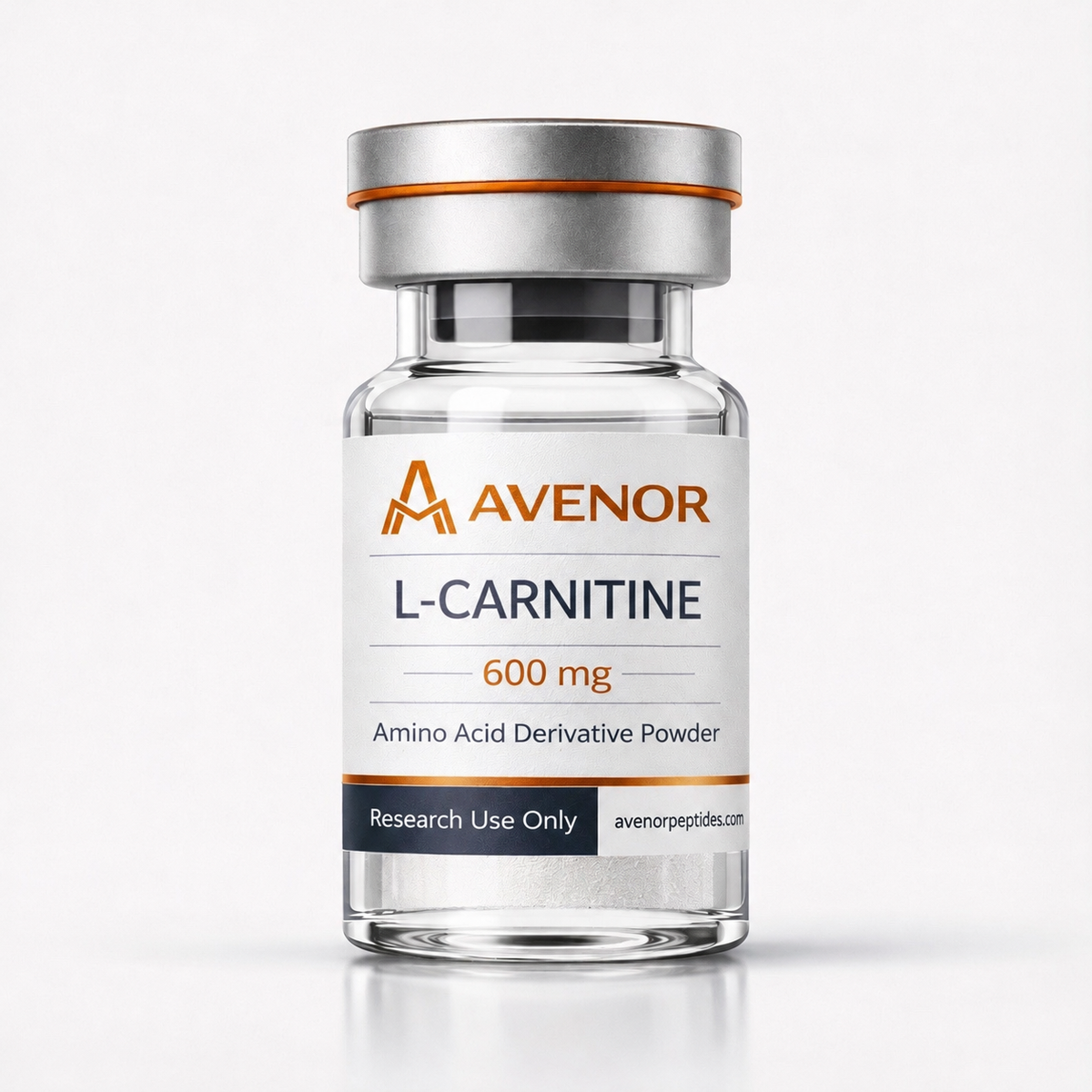
Strength: 600 mg
L-carnitine is a small molecule that the body synthesises from the amino acids lysine and methionine. It is not a peptide. In the cell it carries long-chain fatty acids into the mitochondria.
The more products, the bigger the discount
Free shipping: Greece from €50, Cyprus and Bulgaria from €100, France, Germany, Italy, Belgium, Netherlands, Spain, Austria, Czechia, Denmark, Estonia, Finland, Hungary, Ireland, Lithuania, Luxembourg, Latvia, Poland, Portugal, Romania, Sweden and Slovakia from €200. Details
This product is intended exclusively for laboratory research use. It is not intended for human consumption, diagnosis, treatment, or prevention of disease.
Documentation on request
There is no published document for this specific SKU variant at the moment.
Contact us about documentationResearch overview
L-carnitine is a small molecule that the body synthesises from the amino acids lysine and methionine. It is not a peptide. In the cell it carries long-chain fatty acids into the mitochondria.
It interests researchers because it sits at the point where the cell selects its fuel: without it, long-chain fatty acids cannot cross the inner mitochondrial membrane.
Batch documentation and COA, where available, are linked to the specific product batch and SKU.
This product is intended exclusively for laboratory research use. It is not intended for human consumption, diagnosis, treatment, or prevention of disease.
Product profile
161.20
molecular weight (g/mol)
541-15-1
CAS number
C7H15NO3
molecular formula
600 mg
amount
Research context
A small molecule the body synthesises from lysine and methionine.
It is not a peptide.
C7H15NO3, 161.20 g/mol, CAS 541-15-1 (PubChem CID 10917).
It carries long-chain fatty acids into the mitochondria.
That is where the cell oxidises them.
CPT1 / CACT (SLC25A20) / CPT2 system (Longo 2016); biosynthesis from lysine and methionine (Vaz & Wanders 2002).
One small study in seven men examined muscle carnitine.
Stephens 2006 (n=7); review Stephens 2007.
Its biochemistry is well documented.
The product is supplied for laboratory research only.
A small study, from one research group.
It is intended for use in a controlled laboratory setting, in in vitro studies of fatty-acid transport and oxidation in mitochondria, in enzyme assays of carnitine acyltransferases and as a material in analytical methods.
Research Use Only. Exclusively for laboratory and research use. Not intended for human or veterinary use, or for the diagnosis, treatment or prevention of any condition. It is not a medicine, a food or a dietary supplement.
References
Product information
Explore more
Products from the same research category for quick comparison of documentation, strength and availability.